Minneapolis Local
Sewage Cleanup in Minneapolis
IICRC-certified crews handle extraction, disinfection, and structural drying from first call to final rebuild.
Request an estimate
Tell us what you need
“We were extremely pleased with the work Zach did at our home. We would recommend them to anyone that needs there expertise. …”
- 45 minTypical arrival
- IICRCCertified technicians
- 20+ yrsAcross the metro
- ClaimsInsurance paperwork handled
Minneapolis Sewage Cleanup: What to Expect
Sewage cleanup in Minneapolis is what 911 Restoration of Minneapolis handles when wastewater backs up through your basement floor drain, toilet, or laundry tub. Sewage is classified as Category 3 water, the most contaminated category, and it can't be dried in place or cleaned with a household mop. If you're seeing waste in your basement right now, call (612) 845-7822 and keep everyone out of the area until our crew arrives.
The scope of a sewage job depends on how far the water spread, how long it sat, and what materials it touched. Porous items like carpet, pad, drywall, and insulation that contact sewage are removed and bagged, not cleaned and dried. Hard surfaces like concrete and tile are cleaned and disinfected with EPA-registered antimicrobials. A contained backup in an unfinished basement can often be resolved in two to four days. A finished basement with drywall and flooring involved takes longer, and the rebuild is part of what we coordinate through our own crews. Every job is different, contact 911 Restoration of Minneapolis for an accurate estimate.
Why Sewage Backs Up in Minneapolis Basements
Three causes account for most of the backups we handle across the north and west metro.
Inflow and Infiltration During Rain
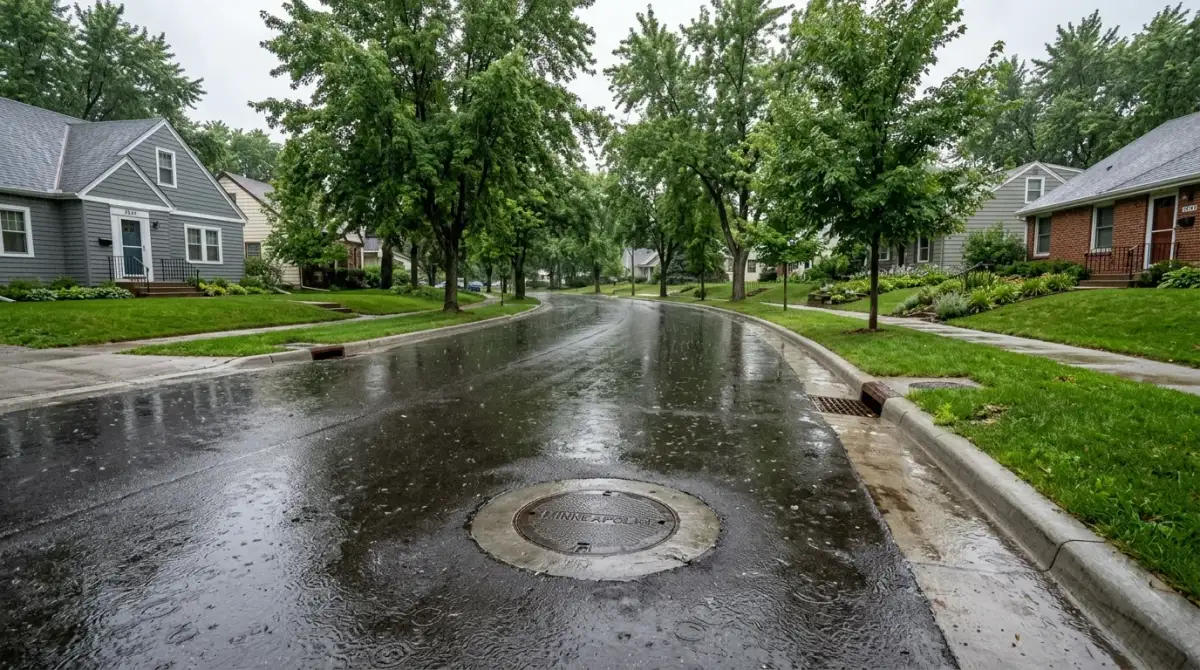
The Metropolitan Council has documented how clear water entering the wastewater system through sump pumps, downspouts, defective laterals, and broken mains can overload the sanitary sewer and push sewage back into basements. One sump pump can discharge as much water in a storm as 40 homes use on a typical day. Heavy spring snowmelt and summer thunderstorms are the two highest-risk windows in the Twin Cities.
Aging Pipe Systems in Older Neighborhoods
Pre-1950s neighborhoods like South Minneapolis, Northeast, Longfellow, and Powderhorn Park were built with clay lateral lines that crack, shift, and collect root intrusion over decades. When those laterals partially collapse or block, any heavy-rain event can push wastewater back toward the house. We see this pattern repeatedly in areas where the housing stock is 60 to 80 years old.
Floor Drains as the Path of Least Resistance
When the main sewer line is overloaded, wastewater takes the lowest available path. That's almost always a basement floor drain, shower drain, or laundry tub. Anything that contaminated water touches is a biohazard. You can't tell by looking at it which surfaces are safe, and attempting to clean sewage without protective equipment and proper extractors makes the contamination worse.
Our Process
How We Handle a Sewage Backup, Step by Step
Contain and Extract
You call (612) 845-7822 and we tell you how to keep people and pets away from the area. Our crew arrives in protective equipment and immediately contains the affected zone, then extracts sewage and contaminated water with commercial pumps and extractors.
Remove, Clean, and Disinfect
We remove and bag all porous materials sewage contacted, carpet, pad, drywall, insulation. Every affected hard surface is cleaned and treated with EPA-registered disinfectants. We document each material and room in a written scope for your insurance adjuster. Odor control treatment runs throughout the process, not just at the end.
Dry, Document, and Rebuild
We dry the structure to verified targets using calibrated moisture meters and thermal imaging, not guesswork. Once drying is complete, our own crews handle reconstruction so you don't need to find a second contractor. You'll know what's happening, what comes next, and when things return to normal at every stage.
Warning Signs
Signs You Need Sewage Cleanup Right Now
If you're seeing any of these, call before you touch anything.
What should I do when sewage backs up into my basement?
Is sewage cleanup different from regular water damage restoration?
What are the most common causes of sewage backups in Minneapolis?
How long does sewage cleanup typically take?
Is sewage backup covered by homeowners insurance in Minneapolis?
Do I need a plumber and a restoration company, or just one?
What should I do immediately after discovering a sewage backup in my Minneapolis home?
What is the difference between sewage cleanup and regular water damage restoration?
How much does sewage cleanup cost in Minneapolis, and what factors affect the price?
How often do residential sewer lines need to be replaced in older Minneapolis neighborhoods?
Will my homeowners insurance cover a sewage backup in Minneapolis?
Do I need both a plumber and a restoration company after a sewage backup?
What We Restore After a Sewage Backup
Every material category below is documented in writing for your insurance adjuster.
Finished and Unfinished Basements
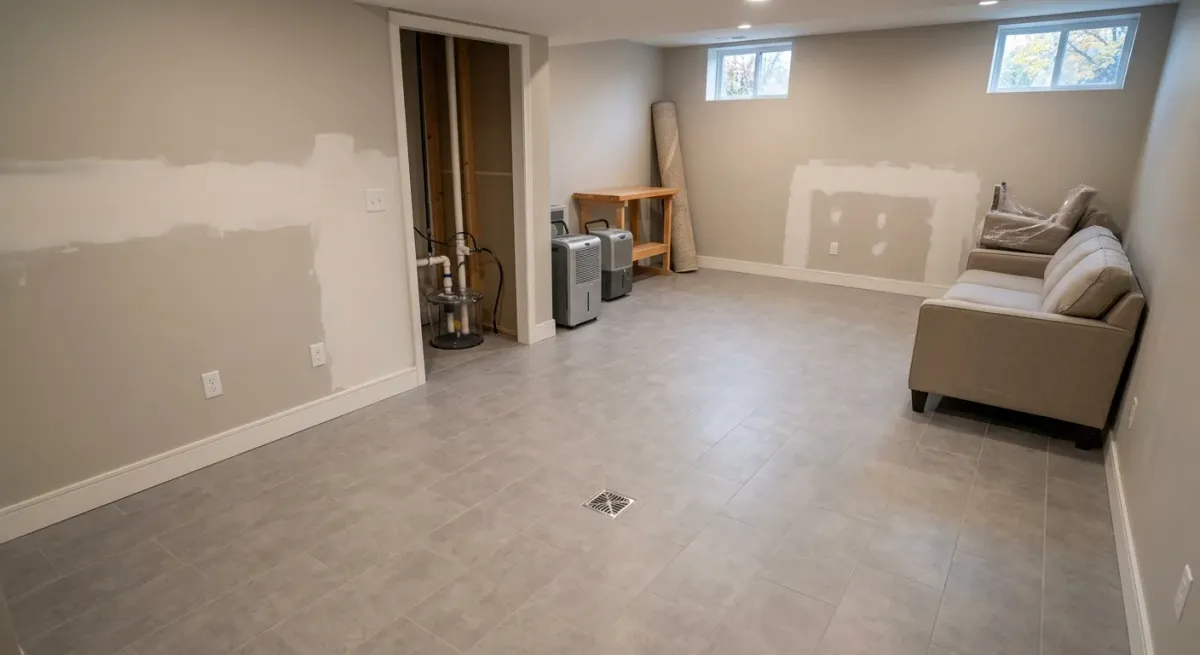
Finished spaces require demolition of contaminated drywall, flooring, and insulation before drying can begin. Unfinished basements with exposed concrete are faster to restore but still require thorough disinfection of framing and sill plates.
Flooring, Carpet, and Contents
Carpet and pad that sewage contacts are removed and disposed of as biohazard waste. Hard flooring is assessed individually. Contents stored in the basement are inventoried and either cleaned or documented for replacement claim.
Drywall, Insulation, and Framing
Drywall absorbs sewage quickly and can't be disinfected reliably, so it's removed to a clean line. Insulation is removed. Framing and sill plates are cleaned, treated, and dried to verified moisture targets before any rebuild begins.
HVAC Equipment and Utility Areas
Floor-level HVAC components, water heaters, and laundry equipment in affected areas are assessed for contamination. Laundry and utility rooms are among the most commonly affected spaces in a basement backup and are fully included in our scope.
Insurance and Documentation for Sewage Losses
Why Choose Us
What Makes 911 Restoration Different on a Sewage Call
Zach Dullinger has been handling water and contamination losses in Minneapolis for over 20 years. This is what that experience means in practice.
- IICRC-Certified Technicians
- AMRT, WRT, ASD, and OCT credentials on staff, sewage remediation requires all of them.
- 4.8 stars across 124 Google reviews
- Earned on jobs that required real communication under pressure, not easy clean-up calls.
- Direct line to the owner
- Zach's mobile is the business number. You're not calling a dispatch center.
- Full-service from extraction to rebuild
- We don't hand you off. [Biohazard cleanup](/services/biohazard-cleanup), [sanitization](/services/sanitization), drying, and reconstruction are all in-house.
In the field
A look at our work
Call Zach's Direct Line for Sewage Cleanup in Minneapolis
Sewage in the basement doesn't wait, and neither do we.
Related
Next step
Tell us about the job
Your name, your number and what needs doing. A person from 911 Restoration of Minneapolis gets back to you.
Rather talk now?(612) 845-7822