Minneapolis Local
Biohazard Cleanup in Minneapolis
Discreet, IICRC-certified cleanup for trauma scenes, unattended deaths, and infectious waste across the Twin Cities metro.
Request an estimate
Tell us what you need
“Zach came out right away to assess some water damage we had. He quickly put a plan in place, gave his recommendations, and explained what to expect along the way. …”
- 45 minTypical arrival
- IICRCCertified technicians
- 20+ yrsAcross the metro
- ClaimsInsurance paperwork handled
Minneapolis Biohazard Cleanup: What to Expect
Biohazard cleanup in Minneapolis is specialized work governed by federal OSHA standards and Minnesota Pollution Control Agency regulations, and 911 Restoration of Minneapolis handles it across the Twin Cities metro with IICRC-certified technicians, unmarked vehicles on request, and direct insurance coordination. If you're reading this after a trauma, an unattended death, or a contamination event, call (612) 845-7822 now. We'll speak with you privately, confirm law enforcement has released the scene, and dispatch a crew. Most north metro arrivals take roughly 45 minutes.
The scope of a biohazard job varies considerably depending on how much contamination is present, how long it sat, and which materials it reached. Blood and bodily fluids soak into carpet pad, subfloor, and drywall fast, especially in Minnesota's tightly sealed winter homes where odor concentrates and spreads. A contained spill on a hard surface may be resolved in a few hours. An unattended death or hoarding situation with structural penetration typically runs one to two days, sometimes longer when odor treatment and material replacement are needed. What drives cost is primarily the volume of contamination, the materials affected, and whether removal and reconstruction are required. Every job is different -- contact 911 Restoration of Minneapolis for an accurate estimate.
When Biohazard Cleanup Applies
Not every difficult scene is the same. These are the situations that require professional decontamination, not a mop and bleach.
Unattended Deaths
When a death isn't discovered immediately, decomposition creates contamination that spreads beyond what's visible. Odor penetrates porous materials, and biological fluids reach subfloor and wall cavities. Standard cleaning products don't neutralize pathogens at this level.
Trauma and Crime Scenes
Blood and bodily fluids from injuries, suicides, or assaults require containment, proper PPE, and regulated waste disposal. Law enforcement must release the scene first. Don't enter the area before that clearance.
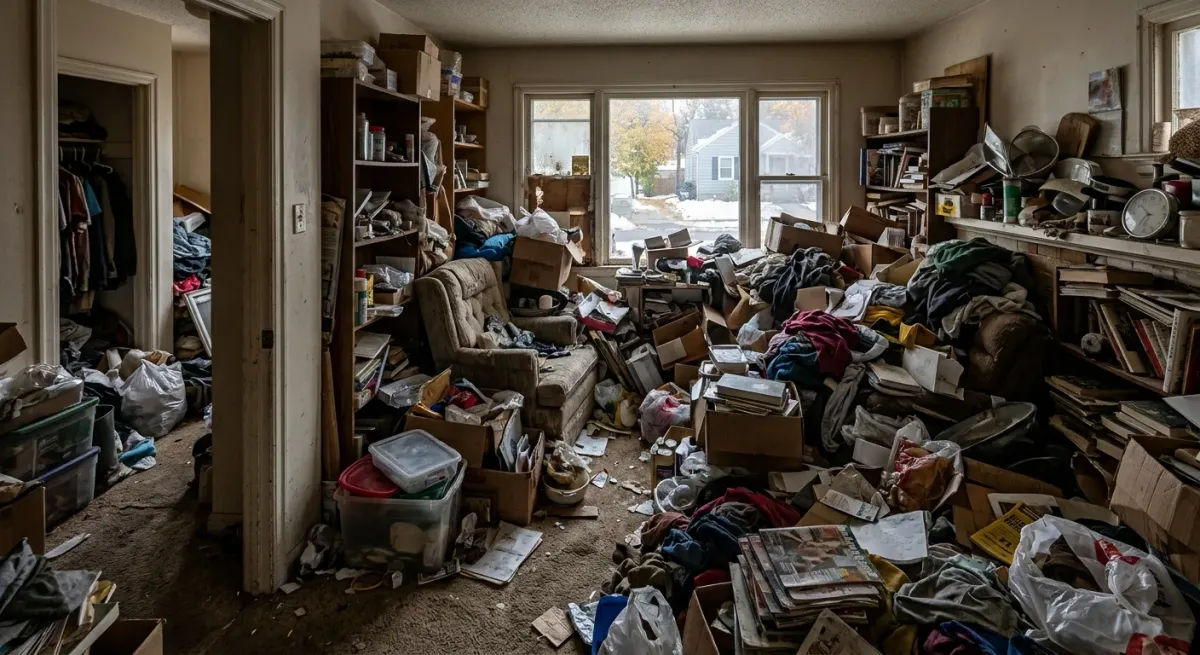
Hoarding Conditions
Hoarding situations involving human waste, animal contamination, or pest infestation carry significant pathogen risk. Volume and structural penetration both affect timeline. These jobs often require coordination with mold removal when biological material has been present long-term.
Drug Paraphernalia and Needles
Needle recovery and disposal from rental units, common areas, or residential spaces falls under infectious waste regulations. Sharps require specific packaging and cannot go in household trash under Minnesota law.
Sewage and Infectious Waste
Raw sewage carries pathogens including E. coli, hepatitis A, and other bloodborne risks. Sewage cleanup that involves human waste requires the same decontamination protocols as trauma scenes, not a standard water mitigation response.
Vehicles and Personal Property
Contamination doesn't stop at walls. Vehicles, furniture, mattresses, and personal items may require decontamination or disposal. We document what's removed and set aside recoverable personal property for the family whenever possible.
Our Process
How We Handle Crime Scene Cleanup
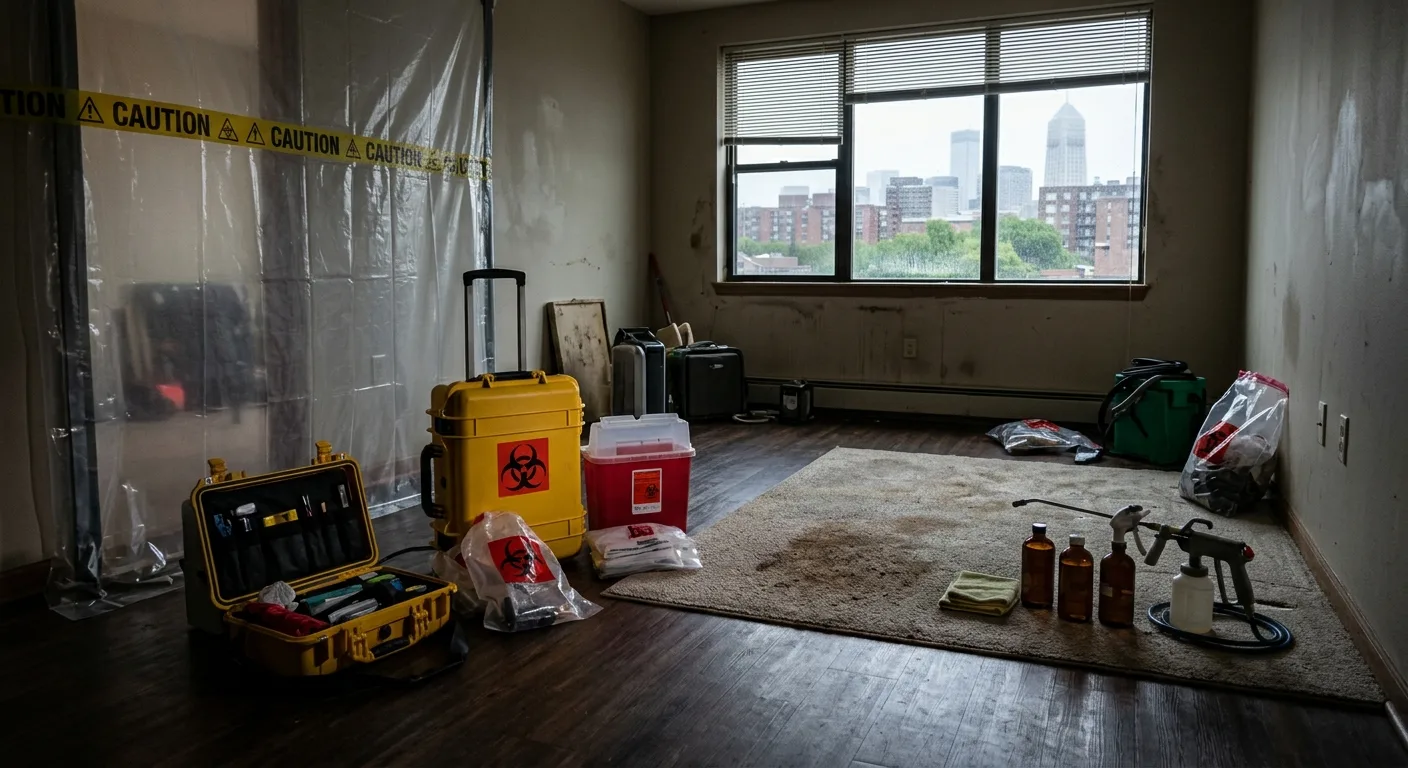
Every step follows OSHA's Bloodborne Pathogens Standard and Minnesota Pollution Control Agency infectious waste rules.
You call. We handle it privately.
Call (612) 845-7822. We speak with you directly, confirm law enforcement has released the scene, and schedule immediately. Unmarked vehicles are available on request.
Containment and assessment
Crews arrive in full protective equipment, set up containment to prevent cross-contamination, and assess the full extent of affected materials including subfloor, cavities, and HVAC if relevant.
Removal and regulated disposal
Blood, bodily fluids, and contaminated porous materials are removed and packaged as regulated infectious waste per MPCA requirements. Nothing goes in the household trash.
Disinfection, odor treatment, and documentation
Every affected hard surface is disinfected and verified clean. Odor is treated using professional-grade equipment. We document the full scope and communicate with your insurance adjuster directly.
Regulatory Context
Minnesota Rules That Apply to This Work
What Our Technicians Are Certified to Handle
AMRT
Applied Microbial Remediation Technician. Covers mold and microbial contamination, including biological material that has penetrated structural components.
OCT
Odor Control Technician. Addresses persistent odor from decomposition, smoke, or biological contamination -- not masking, actual neutralization.
WRT
Water Damage Restoration Technician. Relevant when fluids have penetrated flooring, subfloor, or wall assemblies and structural drying is required alongside decontamination.
FSRT
Fire and Smoke Damage Restoration Technician. Applies when a biohazard scene also involves fire or smoke contamination, which sometimes occurs in complex trauma situations.
What We Clean and Restore
From residential bedrooms to commercial spaces, contamination doesn't observe boundaries.
- Flooring, carpet, and subfloors
- Including removal and replacement when penetration has occurred
- Drywall, trim, and wall cavities
- Structural components that absorbed biological material
- Furniture, mattresses, and personal items
- Recoverable items documented; contaminated items disposed as regulated waste
- Rental units, apartments, and commercial spaces
- Including documentation for property managers and landlords
Insurance
Insurance Coverage and Documentation
Biohazard Cleanup: Key Facts at a Glance
What certifications do biohazard cleanup technicians need in Minnesota?
How is biohazard cleanup different from regular deep cleaning?
What happens to biohazard waste after it's removed?
Are biohazard cleanup services covered by homeowner's insurance?
How long does biohazard cleanup take?
What should I do immediately after a biohazard incident, before calling?
Does the whole house need to be cleaned after a death?
What happens to biohazard waste after it's removed from a Minneapolis property?
How long does biohazard cleanup take in a typical Minneapolis home?
Who pays for biohazard cleanup when it's in a rental property?
Does the whole house need to be decontaminated after a death?
Serving the Twin Cities Metro
We dispatch from Blaine and cover the full north and west metro. Typical arrival is 45 minutes to most of these areas.
In the field
A look at our work
Call Zach's Direct Line -- We Handle the Rest
Biohazard scenes don't wait. Neither do we.
Related
Next step
Tell us about the job
Your name, your number and what needs doing. A person from 911 Restoration of Minneapolis gets back to you.
Rather talk now?(612) 845-7822