Minneapolis Local
Commercial Restoration in Minneapolis
IICRC-certified crews, direct insurance coordination, and phased scheduling to keep your operations running.
Request an estimate
Tell us what you need
“Zach quickly responded to our water problem, was honest, transparent and very quickly went to work once we gave the go ahead. …”
- 45 minTypical arrival
- IICRCCertified technicians
- 20+ yrsAcross the metro
- ClaimsInsurance paperwork handled
Minneapolis Commercial Restoration That Limits Downtime
Commercial restoration in Minneapolis means stabilizing a damaged building fast enough that the damage stops spreading and your business doesn't lose more days than it has to. 911 Restoration of Minneapolis handles commercial water damage, fire and smoke damage, mold, sewage backups, and storm losses for offices, retail centers, apartment buildings, and light industrial properties across the metro. Zach Dullinger's team carries IICRC certifications in water damage restoration, applied structural drying, applied microbial remediation, fire and smoke restoration, and odor control. That credential set matters when your adjuster is reviewing the claim: certified documentation holds up in ways an uncertified contractor's photos and notes often don't. Call (612) 845-7822 now and we'll confirm arrival time before we hang up.
The scope and timeline of commercial restoration depends on the size of the affected area, the building systems involved, and whether tenants or staff need to stay operational during the work. A contained water damage event in a single office suite can often be dried and returned to service within a few days. Losses spanning multiple floors, a fire in a common area, or a sewage backup near occupied restrooms take longer and move into reconstruction once drying and remediation are complete. We phase work to keep unaffected areas open wherever it's safe to do so, and we schedule noisy or disruptive work for hours that fit your operations. Every job is different -- contact 911 Restoration of Minneapolis for an accurate estimate.
Commercial Risks Minneapolis Property Owners Face
Minnesota's freeze-thaw cycle and severe weather seasons create specific failure points in commercial buildings that residential contractors often underestimate.
Burst Pipes and Water Main Failures
During the deep cold of January 2019, water mains broke and power failed across parts of the Twin Cities metro. A split sprinkler line or supply pipe in an unheated mechanical room can flood several floors of an office or apartment building overnight. Commercial buildings with longer pipe runs and older sprinkler systems are especially vulnerable.
Hail, Wind, and Envelope Breaches
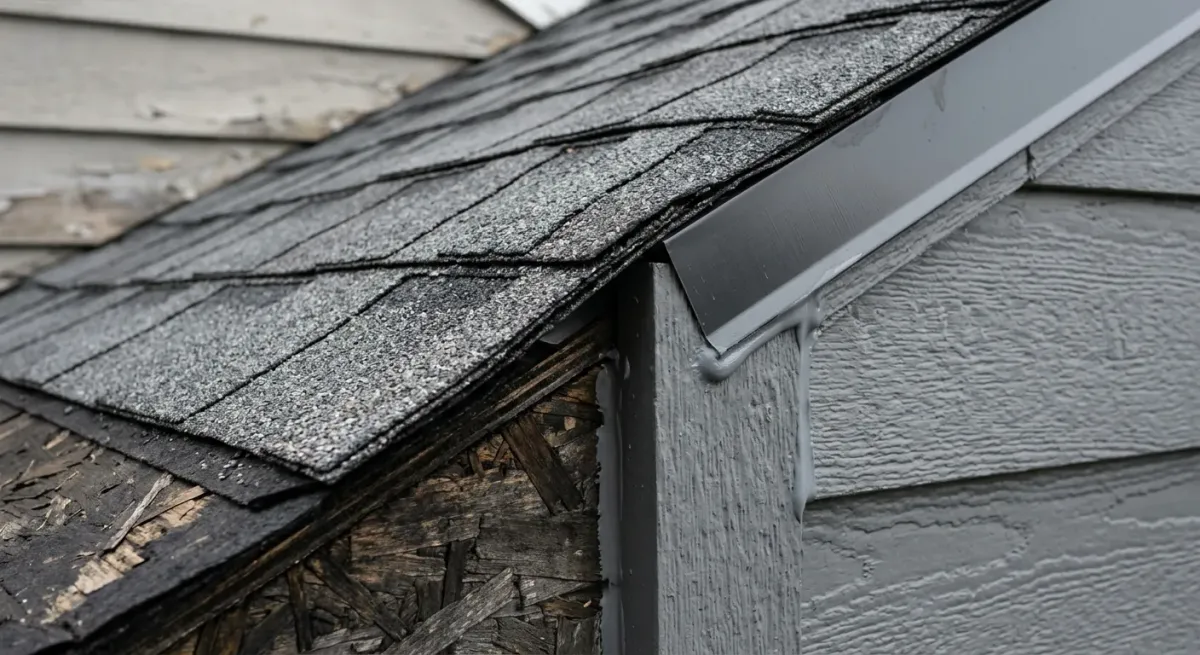
A hail core crossed the western and northern suburbs on August 5, 2019, damaging roofs, windows, and siding on commercial properties from Plymouth to Bloomington. Straight-line winds in July 2025 dropped trees across the metro and caused widespread power outages. Any opening in the building envelope lets rain reach ceilings, insulation, stock, and tenant spaces below.
Sewage Backups in High-Use Buildings
Floor drains and restroom plumbing in retail centers, restaurants, and apartment buildings handle far higher load than residential systems. A backup introduces Category 3 contamination that requires full biohazard cleanup protocols before any drying or reconstruction can begin. Delaying treatment by even a few hours extends the remediation timeline significantly.
Fire and Smoke in Adjacent Units
A fire in one suite, unit, or neighboring building can push smoke, soot, and odor through shared ductwork, corridors, and unsealed penetrations into spaces that never saw a flame. Fire damage restoration in a commercial setting requires odor control at the source level, not just surface cleaning of visible soot deposits.
Mold in Storage and Common Areas
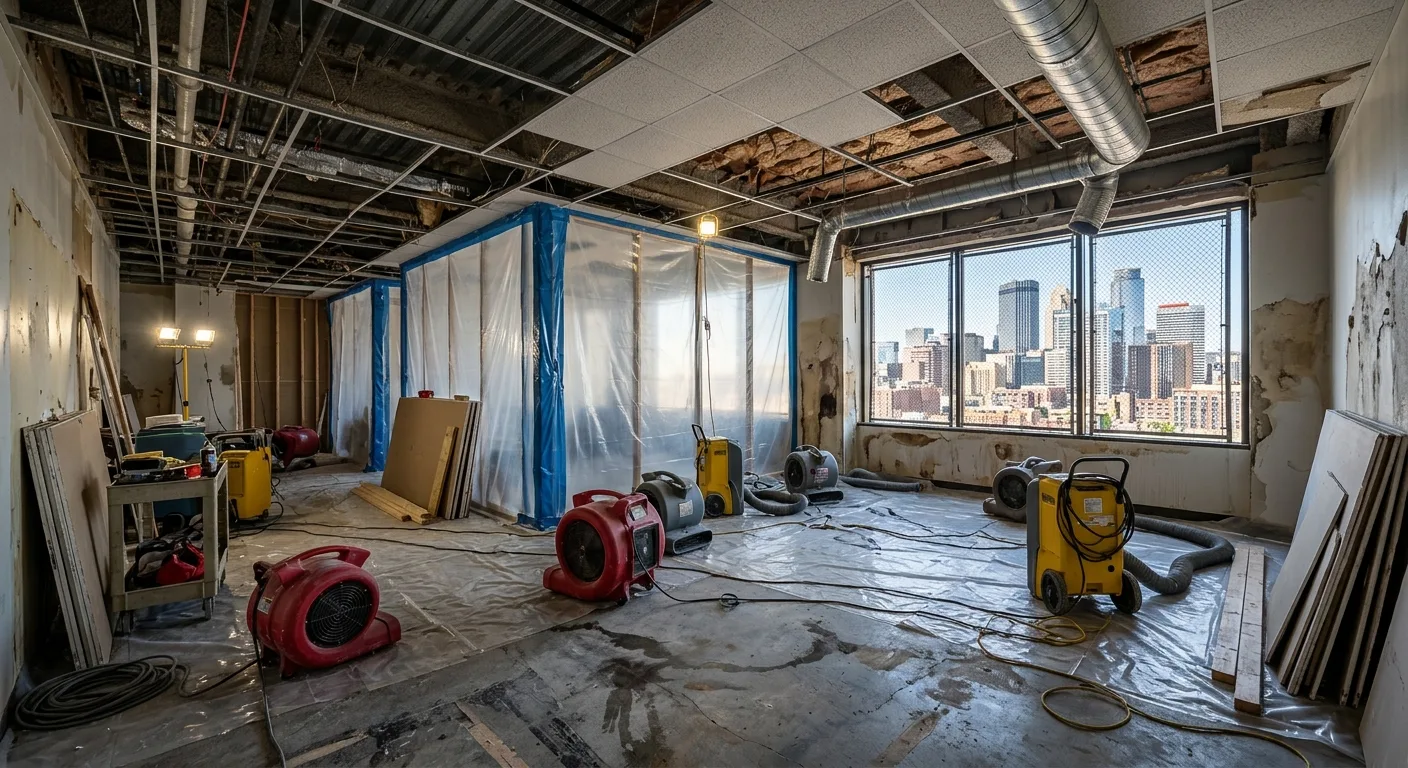
Minneapolis humidity and older commercial building stock -- particularly in the warehouse districts and North Loop -- create conditions where mold can establish in stairwells, storage rooms, and behind exterior walls within 48 to 72 hours of a moisture event. Mold removal in occupied buildings requires containment to keep spore counts out of tenant spaces during remediation.
Storm Damage to Roofs and Entry Points
Hail damage to membrane roofing is frequently invisible from the ground but creates micro-punctures that allow slow water intrusion for weeks before a ceiling tile fails. Storm damage documentation for commercial insurance claims requires thermal imaging and moisture mapping, not just a visual inspection of the surface.
Our Process
How We Handle a Commercial Loss
Five steps, sized to the building, documented for your carrier.
Warning Signs
Signs You Need Commercial Restoration Now
Water coming from a ceiling, sprinkler line, or roof drain
Sewage backup in restrooms or floor drains
Smoke or soot after a fire in the building or a neighboring unit
Musty odors or visible mold in stairwells, offices, or storage areas
Wet carpet tiles or swollen baseboards along exterior walls
Storm damage to the roof, windows, or entry doors
How quickly can 911 Restoration of Minneapolis reach a commercial property?
What does commercial structural drying involve, and why is it different from residential drying?
Can part of the building stay open during restoration?
How does IICRC certification affect commercial mold remediation?
What should I do in the first 15 minutes after discovering commercial water damage?
Can damaged inventory, equipment, or business contents be restored?
What does applied structural drying (ASD) involve in a commercial building?
Can part of a commercial building stay open during restoration work?
How does IICRC certification affect a commercial mold remediation claim?
What should a property manager do in the first 15 minutes after discovering commercial water damage?
How does 911 Restoration of Minneapolis handle documentation for commercial insurance claims?
What We Restore After a Commercial Loss
We work in occupied and partially occupied buildings across all commercial property types.
Offices, Suites, and Medical Spaces
From single-tenant office suites to multi-floor professional buildings and medical or dental offices where HIPAA-compliant documentation of the scope is required.
Retail, Restaurant, and Hospitality
High-traffic flooring, commercial kitchen equipment, and customer-facing spaces that cannot afford extended closures. We schedule work for off-hours wherever the loss allows it.
Apartment, Condo, and Mixed-Use Buildings
Multi-tenant properties in Bloomington, Eden Prairie, Minnetonka, and across the metro. Tenant-by-tenant coordination and direct communication with property managers throughout the job.
Warehouses, Schools, and Institutional Buildings
Larger-footprint losses with more complex building systems -- including light industrial space, churches, and school buildings where phased scheduling around occupancy is critical.
Insurance
Direct Insurance Coordination for Commercial Claims
What Good Commercial Restoration Looks Like -- Fast
Six things you should see on every commercial restoration job. If you're not seeing them, call us.
- Moisture mapping with thermal imaging on day one
- Not a visual estimate -- actual readings that define the boundary of the affected area.
- Written scope before equipment is placed
- Your adjuster and property manager get a plan they can read, not a verbal description.
- Daily moisture logs with equipment adjustments
- Applied structural drying is an active process. Readings go in the claim file every day.
- Containment that keeps unaffected areas open
- Properly set barriers and negative air pressure keep spore and soot counts out of occupied spaces.
In the field
A look at our work
Get a Commercial Restoration Assessment
Call Zach's direct line for an honest scope and same-day dispatch.
Related
Next step
Tell us about the job
Your name, your number and what needs doing. A person from 911 Restoration of Minneapolis gets back to you.
Rather talk now?(612) 845-7822